
Reliance Natural Resources Ltd has questioned oil ministry's right to approve the price at which a producer sells gas to customers, saying its nod was needed only for the formula or basis of pricing of gas for computing government's share.
The petroleum ministry has rapped Reliance Industries for failing to meet its obligations of opening and operating 10 per cent of its petrol and diesel retail outlets in remote and low-service areas.
The oil ministry is in fact of the view that the government should bear the entire burden of the revenue losses incurred by the oil marketing companies, after the increase in prices is effected.
The petroleum ministry has sought a Rs 10 per litre increase in petrol and Rs 5 a litre hike in diesel prices, along with a cut in customs and excise duties, to offset the impact of surge in crude oil prices that have touched $135 per barrel.

Growth in demand for diesel, India's most consumed petroleum product, fell to its lowest since the pandemic in the financial year ended March 31 as the economy expands at a slower pace and consumption shifts to cleaner fuels. Diesel consumption rose 2 per cent to 91.4 million tonnes in 2024-25 (April 2024 to March 2025) fiscal, according to provisional data released by the Petroleum Planning and Analysis Cell (PPAC) of the Oil Ministry.

'Both initiatives are welcome moves and we would commit ourselves with focused attention aligned with the national priorities, and pursue our exploration initiatives.'
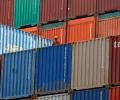
India's exports declined for the fourth month in a row in February to $36.91 billion due to volatility in petroleum prices and global uncertainties. The country's exports stood at $41.41 billion in the same month a year ago.
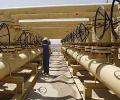
The approval is required to put through gas sales agreements with customers, which in turn are required to finalise Gas Transportation Agreements with transmission companies.
The petroleum ministry has recommended a hike in the foreign direct investment cap in government-owned refineries to 49 per cent from the current 26 per cent.

The government does not seem inclined, at least in the petroleum sector, to effect sudden and steep upward price revisions to tame its huge subsidy burden and rein in fiscal deficit.

The trade relationship between India and the United States has been strained by the imposition of 25% tariff by the US on Indian goods.

Chinese import tariffs have unwittingly come to India's assistance to help boost imports of US liquefied petroleum gas (LPG) at rates cheaper than what it pays for supplies from West Asia, according to industry sources and shipping data.

OMCs are currently incurring daily under-recovery of Rs 230 crore.
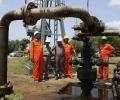
RIL and Shell ceased production from the fields in 2016, and ONGC has already been using Tapti infrastructure for its other fields for better optimisation.
Petroleum ministry rejects conclusions of two reports ahead of EGoM.

The US remained India's largest trading partner for the fourth consecutive year in 2024-25 with bilateral trade valued at $131.84 billion, while the country's trade deficit with China widened to $99.2 billion during the same period, government data showed. In the last fiscal, India's exports to China contracted 14.5 per cent to $14.25 billion as against $16.66 billion in 2023-24. The imports, however, rose by 11.52 per cent in 2024-25 to $113.45 billion against $101.73 billion in 2023-24.
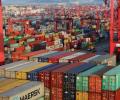
India's exports rose 9.03 per cent to $38.49 billion in April, the highest in six months, driven by healthy growth in sectors such as electronics and engineering goods, while the trade deficit widened to a five-month high of $26.42 billion. According to the commerce ministry data released on Thursday, imports increased by 19.12 per cent year-on-year to $64.91 billion in April due to a rise in shipments of crude oil and fertiliser.
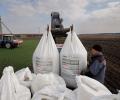
For the first time, the government is likely to dip into the Oil Industry Development Fund (OIDF) to finance part of its fertiliser subsidy programme for 2025-26, according to official sources. The finance ministry has accounted for Rs 23,000 crore in the FY26 Budget as net additional resources to be drawn from dedicated reserve funds, including the OIDF, the Agriculture Infrastructure and Development Fund, and the Universal Service Obligation Fund.
The company also said it has reduced supplies of direct sale of diesel to the railways, state road corporations and other large consumers from April 2008 to restrict heavy under recoveries on these sales. In the annual report sent to the shareholders , the company said it has approval to set up 500 retail outlets across the country. The company had opened its first retail outlet in Karnataka early this year.

The 16th Brics Summit beginning Tuesday in Kazan, Russia, is expected to see more focus on creating a sharper energy policy for Brics that ensures closer partnership among members in both energy security and energy transition, official sources said. The same is expected to be a part of the Kazan declaration, currently being negotiated, they added.

In a presentation prepared for the incoming Narendra Modi-government, the ministry listed national oil companies losing focus on domestic exploration as well as legal disputes around signed contracts with private explorers among the five things that went wrong during the United Progressive Alliance regime.

The official said there are both challenges and opportunities for India as many of its competitor countries in exports, such as China Vietnam, Bangladesh, Cambodia and Thailand, face higher duties.

Retail inflation declined to over six-year low of 2.1 per cent in June, nearing the RBI's comfort zone, on account of subdued prices of food items, including vegetables, driven by widespread monsoon.
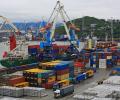
eclined for the third month in a row in January, falling by 2.38 per cent year-on-year to $36.43 billion, while the trade deficit widened to $22.99 billion in the month. Imports rose by 10.28 per cent year-on-year to $59.42 billion in January due to an increase gold shipments, according to the Commerce Ministry data. The trade deficit was $21.94 billion in December and $16.55 billion in January last year.

Three years after India declared its goal to become a net-zero economy by 2070, the policy design for achieving the target has begun, with the NITI Aayog forming dedicated multi-sectoral committees to prepare a transition plan. In 2021, India joined a select group of nations that set a target year for becoming net-zero carbon economy. At COP26 in Glasgow, Prime Minister Narendra Modi outlined a five-pronged 'Panchamitra' climate action target for India and committed to a net-zero target by 2070, joining nations like the US, the UK, and China.
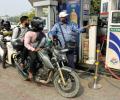
The Delhi government will stop providing petrol to vehicles older than 15 years at fuel stations across the city after March 31, Environment Minister Manjinder Singh Sirsa announced. The decision is part of the government's efforts to combat air pollution in the national capital. The meeting focused on key policy decisions, including restrictions on older vehicles, mandatory anti-smog measures, and the transition to electric public transport. The government will install gadgets at petrol pumps to identify vehicles older than 15 years, and no fuel will be provided to them.
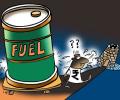
Bringing petrol, diesel and other petroleum products under the single nation-wide GST regime will reduce taxes on these products and increase the revenue of both the Centre and states, Union Minister Nitin Gadkari said on Wednesday. Finance Minister Nirmala Sitharaman will definitely try to bring petrol and diesel under GST if she gets the support of the state governments, said Gadkari while addressing the Times Now Summit virtually. "In the GST Council, finance ministers of states are also members.
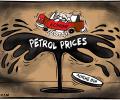
A proposal in the Union Budget 2022-23 to raise excise duty on dirtier, unblended retail petrol and diesel has met with some resistance from the petroleum ministry. However, finance ministry officials say no such communication arguing against the levy of extra duty on diesel has been received from the oil ministry. Until there are discussions between the two departments, the proposal will not be tweaked in the Finance Bill. The Rs 2 per litre additional excise duty proposed on unblended fuels in the Finance Bill will result in a uniform hike of diesel prices across the country from October 1.

The latest flashpoint in West Asia has derailed India's preliminary plans to resume crude oil imports from Iran, officials said. In January, officials of the Ministry of Petroleum and Natural Gas had told Business Standard that the government had been studying proposals for the same, given that India was trying to expand sources of imports. "We are always monitoring the situation when it comes to crude flows.
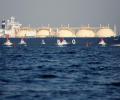
With India making it clear that the US doesn't have enough spare capacity for crude oil, Washington, DC, now wants India to sign fixed-term liquefied natural gas (LNG) contracts with American producers, multiple sources in the know said.
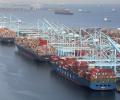
India and the US have decided to hold sector-specific talks in the coming weeks to finalise the structure of the proposed bilateral trade agreement (BTA), the government said on Saturday. The engagement between the two countries came in the backdrop of the USA's threat to impose reciprocal tariffs on its key trading partners, including India, on April 2.

Union Minister of State for Petroleum and Natural Gas Suresh Gopi has stirred controversy by suggesting that members of the "upper castes" should handle the tribal affairs portfolio. Gopi, an actor-turned-politician, argued that true progress in tribal welfare would only be achieved under the leadership of individuals from "upper castes." His comments have been met with widespread criticism, including from CPI state secretary Benoy Viswam and prominent tribal leader C K Janu.

Negotiations near deadlock, as states oppose Constitution Amendment Bill.

Girish Chandra Chaturvedi (57), a 1977 batch Indian Administrative officer from the UP cadre, took charge as the new petroleum secretary on May 3.

70-year-old Reddy, who was made the petroleum minister in January 2011, was shifted to the Ministry of Science and Technology and Earth Sciences in the Cabinet reshuffle on October 28.
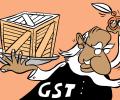
In October 2024, Jindal Stainless challenged a Goods and Services Tax (GST) notice in the Delhi high court. It was about corporate guarantees issued to related parties by its former group company, Jindal Stainless (Hisar), before their merger in March 2023.
According to figures from the Ministry of Petroleum, foreign exchange earnings from the petroleum sector stood at more than $11 billion in the first six months (April-September) of the current financial year. In the last fiscal, it was $9.1 billion.

The government has slapped a $2.81 billion (about Rs 24,500 crore) demand notice on Reliance Industries and its partners, including BP Plc for gains made from producing and selling natural gas that may have migrated from neighbouring block of state-owned ONGC. This follows the Delhi high court's decision on February 14, overturning an international arbitration tribunal ruling that held the duo not responsible for paying any compensation for the gas they produced and sold which had allegedly migrated from adjoining fields.

India's exports grew marginally by 0.7 per cent to $41.97 billion in March, while the trade deficit stood at $21.54 billion in the month, the latest government data showed on Tuesday.
